Confused about Pi & Normal Numbers?
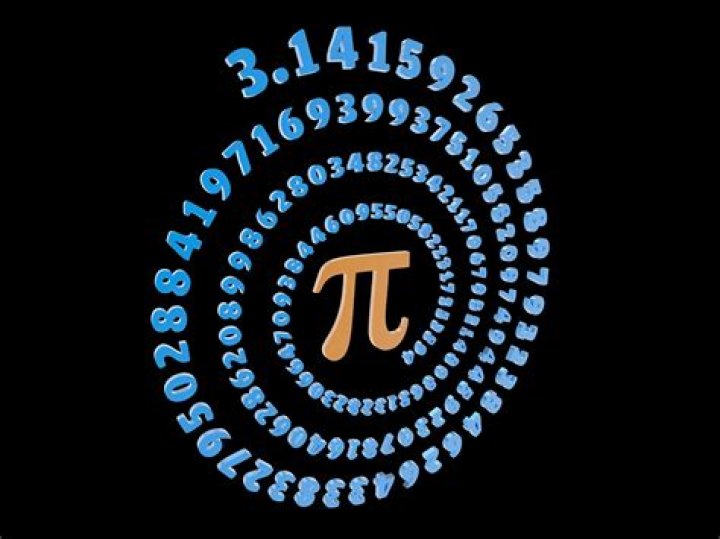
So, my (naive) understanding is that in order for Pi to contain every single possible number combination, Pi has to be a normal number, where each digit in base 10 appears with equal probability. However, I don't really see why this is the case? If you look at the first 50 digits of Pi, you'll see every digit from 0-9. Doesn't that mean that there is a non-zero probability of seeing the digits 0-9 for each place? Since there is a non-zero probability, wouldn't every single sequence show up as Pi is infinite then? I'd appreciate someone showing me what I'm not understanding. Thanks guys!
$\endgroup$1 Answer
$\begingroup$I don't understand how is it that you jump from “If you look at the first 50 digits of Pi, you'll see every digit from 0-9” to “there is a non-zero probability of seeing the digits 0-9 for each place”. Consider the sequence of $0$'s and $1$'s such that
- the first term os $1$;
- all other terms are $0$.
So, you see a $0$ and a $1$ in the first two terms. However, the probabiliy of having a $1$ in the $n$th term is $0$ for every place other than the first one. And $1$ appers only once, not infinitely often, and therefore I don't see why is it that you ask “wouldn't every single sequence show up as $\pi$ is infinite then?”
$\endgroup$ 1