Counting the Number of Faces on A Soccer Ball
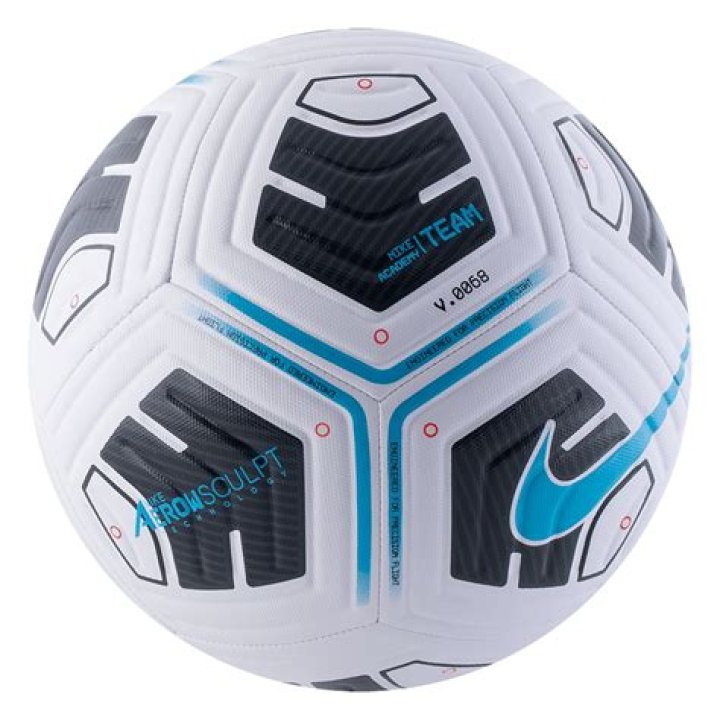
I'm working on a problem in planar graphs, and I came across an interesting problem related to a graph of a soccer ball. Consider a soccer ball made entirely of hexagons and pentagons. Each "vertex" of the soccer ball - the points where three shapes meet, has a degree of three. I want to prove that the number of hexagons and pentagons are constant for any soccer ball.
To some extent, we can imagine the soccer ball as a graph, where each vertex $v_i$ is a point where three shapes meet, and the edges are lines where two shapes meet. Let us consider the number of hexagons $H$ and the number of pentagons $P$ in the graph. I was given the suggestions to consider the bipartition of pentagons $P$ and hexagons $H$, where there is an edge between pentagon $p_i$ and hexagon $h_i$ if they share an edge on the soccer ball. I'm trying to figure out some properties of this bipartition that may give me some information as to a formula between the number of pentagons and the number of hexagons. Given that this graph is likely planar, I would also like to figure out functions of the number of vertices and the number of edges in terms of $P$ and $H$. Any suggestions on this problem?
$\endgroup$ 32 Answers
$\begingroup$You will find that there are twelve pentagons - briefly:
The graph will be planar, because you can take any face of the ball and stretch it to flatten out the sphere. The Euler formula $V+F=E+2$ links the number of vertices, faces and edges. Three edges at a vertex means $3V=2E$. Also counting the edges of the faces $5P+6H=2E$ and $P+H=F$. So $6V+6F=6E+12$ or $6(P+H)=5P+6H+12$, which means $P=12$.
If the configuration is such that two hexagons and a pentagon meet at each vertex you can work out the number of hexagons in a similar way. But you need this extra information before you can answer the question.
$\endgroup$ $\begingroup$I was pleased to learn of a figure with twelve regular pentagons and thirty not quite regular hexagons. the hexagons have all the same edge lengths but the vertex angles differ a little. The total number of faces is 42, so this is important. These hexagons are made by starting with a rhombus, ratio of long diagonal to short diagonal the golden ratio $(1 + \sqrt 5) / 2.$ Then the two sharper points are truncated to make a hexagon with all equal edge lengths and three pairs of parallel edges.