Derive taylor series of $e^{\sin(x)}$ in two different ways
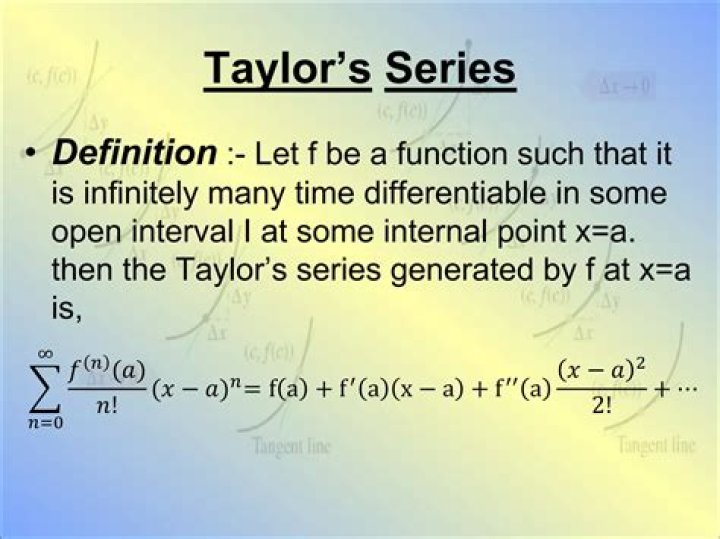
I need to find the Taylor series of $e^{\sin(x)}$ up to $x^4$ in two different ways. First I derived it by calculating the derivatives of the function, and I found the answer $P_4(x) = 1+x+ \frac{x^2}{2} - \frac{x^4}{8}$. Now I need to use the Taylor series of $e^y$ and plug in the Taylor series of $\sin(x)$ to find an answer. After that I need to draw a conclusion. So I know the Taylor series of $e^y$ up to $y^4$ looks like $P_4(y) = 1 + y + \frac{y^2}{2} + \frac{y^3}{6} + \frac{y^4}{24}$ and the Taylor series of $\sin(x)$ up to $x^4$ looks like $P_4(x) = x - \frac{x^3}{6}$. I substituted the Taylor series of $\sin(x)$ into the $y$ variable of the Taylor series of $e^y$, but it doesn't give me the same answer as the answer I got by using the first four derivates of $e^{\sin(x)}$. Am I doing anything wrong?
$\endgroup$ 04 Answers
$\begingroup$After computing$$1+\left(x-\frac{x^3}6\right)+\frac12\left(x-\frac{x^3}6\right)^2+\frac16\left(x-\frac{x^3}6\right)^3+\frac1{24}\left(x-\frac{x^3}6\right)^4$$you must eliminate the monomials whose degree is greater than $4$. And then you will get the same answer as before.
$\endgroup$ 5 $\begingroup$Let $e^{\sin x}=\sum_{r=0}^\infty a_rx^r$
$\sin x=\ln(\sum_{r=0}^\infty a_rx^r)$
Differentiate both sides with respect to $x$
$\cos x(\sum_{r=0}^\infty a_rx^r)=\sum_{r=1}^\infty a_rrx^{r-1}$
Expand $\cos x$ and compare the constant and the coefficients of $x,x^2,x^3,x^4$ to find $a_r,0\le r\le4$
$\endgroup$ $\begingroup$Let\begin{equation*} D(x)=\sum_{k=0}^\infty d_kx^k \end{equation*}be a power series expansion. Then the function $E(x)=e^{D(x)}$ has the power series expansion\begin{equation*} E(x)=\sum_{k=0}^\infty e_kx^k, \end{equation*}where the coefficients $e_k$ for $k\in\{0\}\cup\mathbb{N}$ satisfy\begin{align} e_0&=e^{d_0},\\ e_k&=\frac1k\sum_{\ell=1}^k\ell d_\ell e_{k-\ell} =\frac1k\sum_{\ell=0}^{k-1}(k-\ell)d_{k-\ell}e_{\ell},\quad k\in\mathbb{N},\\ e_n&=e^{d_0}\left(d_n+\sum_{j=1}^{n-1}\sum_{\substack{\sum_{i=0}^jm_i=n,\\ m_i\ge1, 0\le i\le j}} \prod_{i=0}^j\frac{m_id_{m_i}}{n-\sum_{q=0}^{i-1}m_q}\right), \quad n\in\mathbb{N}, \end{align}and\begin{equation}\label{alpha-k-power-eq} e_k= e^{d_0}\sum_{j=1}^k\frac1{j!} \sum_{\substack{\sum_{\ell=1}^ji_\ell=k,\\ i_\ell\ge1,1\le\ell\le j}} \prod_{\ell=1}^jd_{i_\ell}, \quad k\in\mathbb{N}. \end{equation}These conclusions can be found in the paper [1] below.
[1] Feng Qi, Xiao-Ting Shi, and Fang-Fang Liu, Expansions of the exponential and the logarithm of power series and applications, Arabian Journal of Mathematics 6 (2017), no. 2, 95--108; available online at .
Consequently, we finally can obtain$$ \exp(\sin x)=1+x+\frac{x^2}{2}-\frac{x^4}{8}-\frac{x^5}{15}-\frac{x^6}{240}+\frac{x^7}{90}+\frac{31 x^8}{5760}+\frac{x^9}{5670}-\frac{2951 x^{10}}{3628800}-\frac{x^{11}}{3150}+\dotsm. $$
$\endgroup$ $\begingroup$The Faa di Bruno formula can be described in terms of partial Bell polynomials $B_{n,k}(x_1,x_2,\dotsc,x_{n-k+1})$ by\begin{equation}\label{Bruno-Bell-Polynomial} \frac{\textrm{d}^n}{\textrm{d} x^n}f\circ h(x)=\sum_{k=0}^nf^{(k)}(h(x)) B_{n,k}\bigl(h'(x),h''(x),\dotsc,h^{(n-k+1)}(x)\bigr). \end{equation}
The partial Bell polynomials $B_{n,k}$ satisfy\begin{multline}\label{bell-sin-eq} B_{n,k}\biggl(-\sin x,-\cos x,\sin x,\cos x,\dotsc, \cos\biggl[x+\frac{(n-k+1)\pi}{2}\biggr]\biggr)\\ =\frac{(-1)^k\cos^kx}{k!}\sum_{\ell=0}^k\binom{k}{\ell}\frac{(-1)^\ell}{(2\cos x)^\ell} \sum_{q=0}^\ell\binom{\ell}{q}(2q-\ell)^n \cos\biggl[(2q-\ell)x+\frac{n\pi}2\biggr] \end{multline}and\begin{multline}\label{bell-sin=ans} B_{n,k}\biggl(\cos x,-\sin x,-\cos x,\sin x,\dotsc, \sin\biggl[x+\frac{(n-k+1)\pi}{2}\biggr]\biggr)\\ =\frac{(-1)^k\sin^{k}x}{k!}\sum_{\ell=0}^k\binom{k}{\ell}\frac1{(2\sin x)^{\ell}} \sum_{q=0}^\ell(-1)^q\binom{\ell}{q}(2q-\ell)^n \cos\biggl[(2q-\ell)x+\frac{(n-\ell)\pi}2\biggr]. \end{multline}Taking $x\to0$ leads to\begin{multline}\label{bell-sin-eq=0} B_{n,k}\biggl(0,-1,0,1,\dotsc, \cos\frac{(n-k+1)\pi}{2}\biggr)\\ =\frac{(-1)^k}{k!}\biggl(\cos\frac{n\pi}2\biggr) \sum_{\ell=0}^k\frac{(-1)^\ell}{2^\ell}\binom{k}{\ell} \sum_{q=0}^\ell\binom{\ell}{q}(2q-\ell)^n \end{multline}and\begin{multline}\label{bell-sin=ans=0} B_{n,k}\biggl(1,0,-1,0,\dotsc, \sin\frac{(n-k+1)\pi}{2}\biggr)\\ =\frac{(-1)^k}{k!2^k} \biggl[\cos\frac{(n-k)\pi}2\biggr] \sum_{q=0}^k(-1)^q\binom{k}{q}(2q-k)^n =\biggl[\cos\frac{(n-k)\pi}2\biggr]2^{n-k}S_{-k/2}(n,k), \end{multline}where\begin{equation*}%\label{S(n,k,x)-satisfy-eq} S_r(n,k)=\frac1{k!}\sum_{j=0}^k(-1)^{k-j}\binom{k}{j}(r+j)^n, \quad n\ge k\ge0. \end{equation*}
By virtue of some formulas above-mentioned, we have\begin{align} \frac{\textrm{d}^n\exp(\sin x)}{\textrm{d} x^n} &=\sum_{k=0}^n\exp(\sin x) B_{n,k}(\cos x, -\sin x, -\cos x,\sin x,\dotsc)\\ &\to\sum_{k=0}^n B_{n,k}(1, 0, -1,0,\dotsc), \quad x\to0\\ &=\sum_{k=0}^n \biggl[\cos\frac{(n-k)\pi}2\biggr]2^{n-k}S_{-k/2}(n,k). \end{align}Consequently, we find\begin{equation} \exp(\sin x)=\sum_{n=0}^\infty\Biggl(\sum_{k=0}^n \biggl[\cos\frac{(n-k)\pi}2\biggr]2^{n-k}S_{-k/2}(n,k)\Biggr)\frac{x^n}{n!}. \end{equation}
References
- B.-N. Guo, D. Lim, and F. Qi, Maclaurin's series expansions for positive integer powers of inverse (hyperbolic) sine and tangent functions, closed-form formula of specific partial Bell polynomials, and series representation of generalized logsine function, Appl. Anal. Discrete Math. 16 (2022), in press; available online at .
- F. Qi, Derivatives of tangent function and tangent numbers, Appl. Math. Comput. 268 (2015), 844--858; available online at .
- F. Qi and J. Gelinas, Revisiting Bouvier's paper on tangent numbers, Adv. Appl. Math. Sci. 16 (2017), no. 8, 275--281.
- F. Qi and B.-N. Guo, An explicit formula for derivative polynomials of the tangent function, Acta Univ. Sapientiae Math. 9 (2017), no. 2, 348--359; available online at .
- F. Qi and B.-N. Guo, Explicit formulas for special values of the Bell polynomials of the second kind and for the Euler numbers and polynomials, Mediterr. J. Math. 14 (2017), no. 3, Art. 140, 14 pages; available online at .
- Feng Qi, Da-Wei Niu, Dongkyu Lim, and Yong-Hong Yao, Special values of the Bell polynomials of the second kind for some sequences and functions, Journal of Mathematical Analysis and Applications 491 (2020), no. 2, Paper No. 124382, 31 pages; available online at .
- F. Qi, G.-S. Wu, and B.-N. Guo, An alternative proof of a closed formula for central factorial numbers of the second kind, Turkish J. Anal. Number Theory 7 (2019), no. 2, 56--58; available online at .
- C.-F. Wei and F. Qi, Several closed expressions for the Euler numbers, J. Inequal. Appl. 2015, Paper No. 219, 8 pages; available online at .
- A.-M. Xu and G.-D. Cen, Closed formulas for computing higher-order derivatives of functions involving exponential functions, Appl. Math. Comput. 270 (2015), 136--141; available online at .
- J.-L. Zhao, Q.-M. Luo, B.-N. Guo, and F. Qi, Remarks on inequalities for the tangent function, Hacet. J. Math. Stat. 41 (2012), no. 4, 499--506.