Die is rolled until 1 appears. What is the probability of rolling it odd number of times?
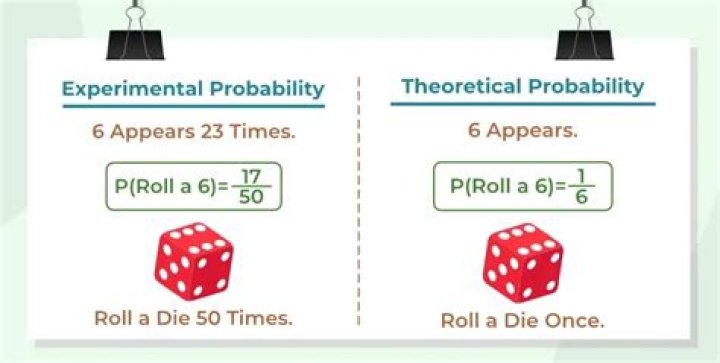
Problem: Die is rolled until 1 appears. What is the probability of rolling it odd number of times?
So, so far I have this:
$\frac{1}{6}$ - this is a probability of rolling "1" on first try
$\frac{5}{6} \cdot \frac{5}{6} \cdot \frac{1}{6}$ - three tries (two times something else than "1" and "1" on the 3rd try
$\frac{5}{6} \cdot \frac{5}{6} \cdot \frac{5}{6} \cdot \frac{5}{6} \cdot
\frac{1}{6}$ - five tries
and so on...
By the looks of it, it seems I could come up with following formula$$ p = \left( \frac{5}{6}\right)^{n-1} \cdot \frac{1}{6}$$where p would be a probability for nth try.
However, I cannot think of any way to get probability of all odd number of tries and not sure if I am even on right track here.
$\endgroup$3 Answers
$\begingroup$Avoid summing of infinite series. Argue as follows instead: Call it a success, if you obtain the first $1$ after an odd number of throws. Let $p$ be the probability of a success. Since the probability that the game never ends is $0$, with probability $1-p$ it then ends after an even number of throws. Conditioning on whether the first throw is a $1$ or not we therefore obtain the following equation for $p$:$$p={1\over 6}\cdot1+{5\over6}\cdot(1-p)\ .$$It follows that ${\displaystyle p={6\over11}}$.
$\endgroup$ 3 $\begingroup$$p(1)=\frac 1 6 $ $P(not 1)=\frac 5 6$
1 on $1^{st}$ roll: $$\frac 1 6=\frac{5^0}{6^1}$$1 on $3^{rd}$ roll: $$\frac 5 6 \cdot \frac 5 6 \cdot \frac 1 6 = \frac {5^2} {6^3} $$1 on $5^{th}$ roll: $$\frac 5 6 \cdot \frac 5 6 \cdot \frac 5 6 \cdot \frac 5 6\cdot \frac 1 6=\frac {5^4}{6^5}$$keep going upto $\infty$: $$\frac{5^0}{6^1}+\frac{5^2}{6^3}+\frac{5^4}{6^5}+...\infty$$use infinite GP summation: $$\frac 1 6 \cdot \frac {1}{ (1- \frac {5^2}{6^2})} $$
$\endgroup$ 1 $\begingroup$$$=\frac 6 {11} $$
Yet another wording for the same argument. See if this thinking/wording is convincing.
$P_m = $ prob of the first $1$ occurring on the $m$-th roll $= (\frac 56)^{m-1}\cdot \frac 16$.
Rolling the first one on the $m$th roll and rolling the first one on the $k$th roll are mutually exclusive events. So
$P_{m\lor k} =$ the probability of rolling the first $1$ occurring on the $m$th roll OR on the $k$th roll $= P_m + P_k$.
So the probability of rolling the first $1$ occurring on one of the odd rolls is:
$P_{odd} = \sum\limits_{m\text{ is odd}} P_m = $
$\sum\limits_{k = 0}^{\infty} P_{2k + 1} = $
$\sum\limits_{k = 0}^{\infty} (\frac 56)^{2k}\cdot \frac 16 =$
$\frac 16(\sum\limits_{k=1}^{\infty}[(\frac 56)^2]^k) = $
$\frac 16(\sum\limits_{k=1}^{\infty}(\frac {25}{36})^k) = $
(.... and as $|\frac {25}{36}|<1$ and as for all $|a|< 1$ we know $1 + a + a^2 + a^3 + .... = \frac 1{1-a}$ we have.....)
$=\frac 16( \frac 1{1- \frac {25}{36}})=\frac 16(\frac 1{\frac {11}{36}})=\frac 16\frac {36}{11}= \frac 6{11}$
$\endgroup$