Do I have a legitimate shortcut for finding the area under a curve?
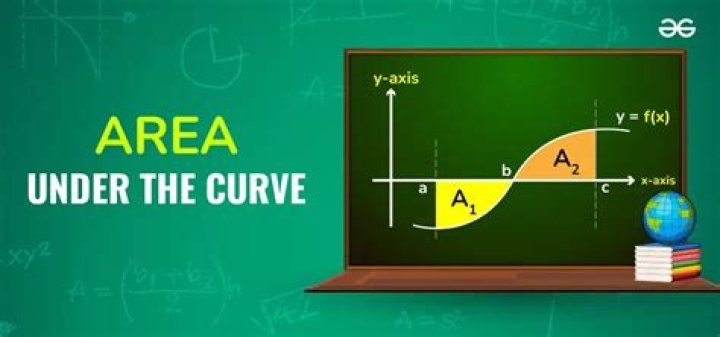
I'm studying functions, and recently I've spent some time looking into finding the area under a parabolic curve with integral calculus.
The methods I've found in this regard are very straightforward, though (and this must be because of a limited knowledge of more advanced methods) I find the solution can take quite some time to write up.
I've toyed around with what seems to be a very simple setup to get an accurate solution to the area under a curve, as well as the area between a curve and a right triangle...
Parabola represents 1/4𝑥^2
𝑥1 = 0 units
𝑦1 = 0 units
𝑥2 = 5 units
𝑦2 = 1/4(5)^2 = 6.25 units
Regarding one-half of the figure above:
Area of the rectangle, R; from 𝑥 = 0 to 𝑥 = 5; to 𝑦 = 6.25:
𝐴 = 𝑙 ∗ 𝑤
𝐴 = 6.25 ∗ 5
𝐴 = 31.25 units
Area of the triangle; A:
𝐴 = 1/2 ∗ 𝑏 ∗ℎ
𝐴 = 1/2 ∗ 5 ∗ 6.25
𝐴 = 15.625 units
Area of under-curve; B:
𝐴𝑇 = 𝐴1 + 𝐴2
𝐴𝑇 = 1/6 ∗ 2(𝑥2 − 𝑥1) ∗ (𝑦2 − 𝑦1) + (𝑦1 ∗ 𝑥2)
𝐴𝑇 = 1/6 ∗ 2(5 − 0) ∗ (6.25 − 0) + (0 ∗ 5)
𝐴𝑇 = 1/6 ∗ (10) ∗ (6.25) + (0)
𝐴𝑇 = 10.41666667 units
Derived from Archimedes’ assertion that the area of the inside of a parabola is equal to 2/3𝑏ℎ. 𝐴2 describes the addition of the area of an inner rectangle that would result from a vertical phase shift; for example, a positive c-value in the form 𝑎𝑥^2+𝑏𝑥+𝑐. In this case, 𝑦1 begins at a number >0, which creates a rectangle directly under the bottom edge of section B.
Area of the space between the triangle and curve; C:
𝐴𝐶 = 𝑅 − (𝐴 + 𝐵)
𝐴𝐶 = 31.25 − (15.625 + 10.41666667)
𝐴𝐶 = 5.20833333 units
2/3𝑏ℎ is 2/3 of the area of the triangle, and 1/3 of the area of the rectangle.
The area of C is proportionate to 5.20833333/15.625 = 1/3 of the area of A.
The area of C is proportionate to 5.20833333/10.41666667 = 1/2 of the area of B.
Equation for determining the area of C:
𝐴 = 1/6𝑏ℎ
𝐴 = 1/6(5)(6.25)
𝐴 = 5.208333333 units
I'm very sorry if the formatting doesn't work out for this post. I'm not used to the layout, nor am I (as you can tell) a very effective communicator of math (haha). Unless there's a '^' involved, any number following a variable is meant as subscript. I will re-post more carefully or email a .pdf to anybody who may have any problems wading through this. Thank you for any advice and tips!
$\endgroup$ 8 Reset to default