Hard time installing Ubuntu 20.04 as Dual Boot on Asus ROG STRIX G17
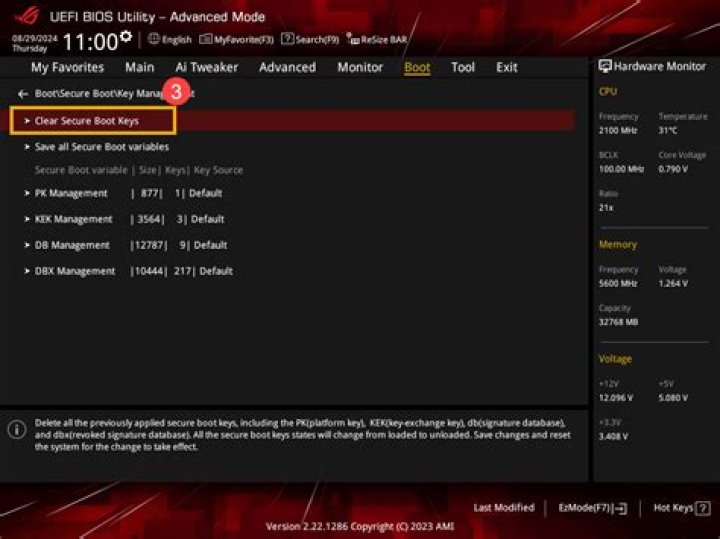
So, installing Ubuntu in the Asus ROG Strix G17 has proven a challenge. I have found this video with multiple tips, but it is not complete.
My current "version" of instructions is like so:
- turn off bitlocker from within windows
- resize the C: partition using the windows partition tool (do not use gparted here)
- create a bootable x/ubuntu pendrive using rufus (usb-create-gtk does not work)
- restart laptop; press F2 to go into BIOS; disable fast boot and secure boot;
- restart laptop; press F2 to go into BIOS; select pendrive as boot source
- nomodeset is NOT needed for the Asus ROG Strix G17 when using Ubuntu 20.04.1
- ubuntu detects the screen resolution correctly IF nomodeset is NOT used, so, don't use it
- try a bit to see if everything is ok; turn on wifi and proceed to installation
- when selecting the keyboard, you will face the first problem; I need a USA keyboard with support for dead keys (because I'm brazilian and need keys like ç and é, which are only available by mixing ' with c and ' with e); the option is there, but the mapping is not correct; not sure how to check the mapping used on windows to compare, but on windows 10 it works fine.
- if you just "power through" this step with a less than ideal keyboard mapping, you will face problem number two: it asks you to turn off RST if you're using a intel processor (damn you intel!). Not sure if I should or the consequences of it; (I gave up here)
Issues I found so far:
- smart keys in the keyboard do not work (none of them, including the one that controls the screen bright, that for some reason goes to MAX by default)
- nvidia-settings does not load properly after installing it; not sure why, I just get an squeezed empty window
- cannot find the correct keyboard mapping
Any ideas or suggestions?
81 Answer
BIOS
Asus ROG Strix G17
You have BIOS version G712LV.308.
There's a newer BIOS available, version G712LV.310, dated 7/22/2020, and can be downloaded here. Use G712LV for "BIOS model name".
Note: Confirm that I have the correct web page for your model #.
Note: Have good backups before updating the BIOS.
Update #1:
Intel RST
You've got a single SSD/HDD set up in RAID mode, and the Ubuntu installer won't recognize your SSD/HDD until you switch your disk setting in the BIOS from RAID to AHCI.
Making that switch comes with some problems though, as Windows will no longer boot.
You don't need to reinstall Windows...
Below, you'll find two different ways to solve this problem. Some users found Choice #2 to be easier.
Make sure to have a backup of your important Windows files!
Choice #1: Looking at this article will show you how to make the change without having to reinstall Windows.
- Boot to Windows with your current SATA controller configuration
- Open
Device Manager - Expand
Storage Controllersand identify theIntel SATA RAID Controller - View properties of the identified controller
- On the Driver tab, click the Update driver… button
- Browse my computer…, Let me pick…
- Uncheck
Show compatible hardware - Select
Microsoftas manufacturer - Select
Microsoft Storage Spaces Controlleras model # - Accept that
Windows cannot confirm that this driver is compatible - Save changes, reboot to BIOS and change RAID SATA Controller to AHCI
- Save changes and reboot normally, hopefully to Windows
Now you should be able to install Ubuntu in a dual-boot configuration.
Choice #2: See
- Right-click the Windows Start Menu. Choose
Command Prompt (Admin). - If you don’t see
Command Promptlisted, it’s because you have already been updated to a later version of Windows. If so, use this method instead to get to the Command Prompt: - Click the Start Button and type
cmd - Right-click the result and select
Run as administrator - Type this command and press ENTER:
bcdedit /set {current} safeboot minimal - If this command does not work for you, try
bcdedit /set safeboot minimal - Restart the computer and enter BIOS Setup (the key to press varies between systems).
- Change the SATA Operation mode to AHCI from either IDE or RAID (again, the language varies).
- Save changes and exit Setup and Windows will automatically boot to Safe Mode.
- Right-click the Windows Start Menu once more. Choose
Command Prompt (Admin) - Type this command and press ENTER:
bcdedit /deletevalue {current} safeboot - If you had to try the alternate command above, you will likely need to do so here also:
bcdedit /deletevalue safeboot - Reboot once more and Windows will automatically start with AHCI drivers enabled.