How to calculate an area enclosed by two parametric curves?
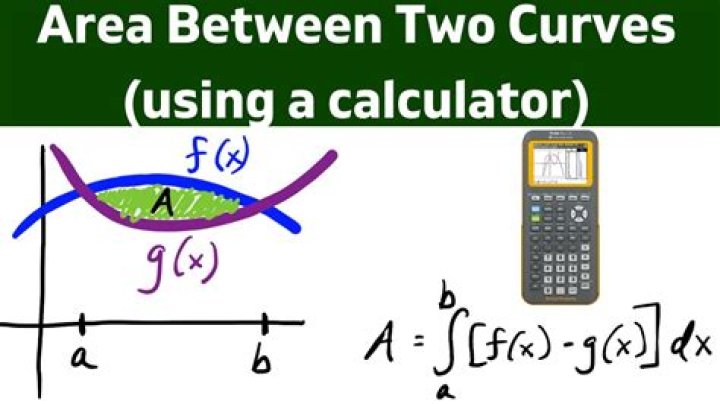
I know the area under the curve given by parametric equations$x=f(t),y=g(t),\alpha\leq t\leq \beta$ is given by$$A=\int_{\alpha}^{\beta}g(t)f'(t)dt$$
That is in $\int_{a}^{b}ydx$ we have substituted $y=g(t) \ and\ x=f(t)$ and apply appropriate limits and we get the above formula.
But my main question arises now, is it possible to calculate an area enclosed by two parametric curves without changing them into cartesian or polar etc coordinates?
For example:Calculate an area enclosed between the asteroid and the circle.
$y=sin^{3}t,\ x=cos^{3}t$ $\ \ \\ \ \ $ ...(1)
$y=sint,\ x=cost$ $ \ \ \\ \ \ $ ...(2)
Graph of these curve are as follows
My try
Am I on the correct way or not.
As we know the area between the two curve is given by $\int_{a}^{b} |f _{1}(x)-f_{2}(x)|dx$ so here we can try $|sint-sin^{3}t|$. But main problem occurs for $dx$ what we have to use it for $x$ that is either $x=x=cos^{3}t \ or \ x=cost$.
Can any one help me?
Thanks in advance
$\endgroup$1 Answer
$\begingroup$$\textbf{Hint :}$
Use relation $$ y^{2/3}+x^{2/3}=1 \qquad \text{for asteroid} \implies y_1(x)=\cdots $$ and $$ y^2+x^2 =1 \qquad \text{for circle} \implies y_2(x)=\cdots $$ So you can integrate directly for first quadrant without worried much about $dx$. If you want to do it by integrate over $t$, you should do them separately to avoid confusion. That is $$ A = \Big|\int_0^1 y_1 dx - \int_0^1 y_2 dx\Big| = \Big|\int_{t_0}^{t_1} \sin^3 t \, d (\cos^3 t) - \int_{s_0}^{s_1} \sin s \, d(\cos s) \Big| $$ for area in the first quadrant.
$\endgroup$ 2