Proof that the limit of $1/x$ as $x$ approaches $0$ does not exist
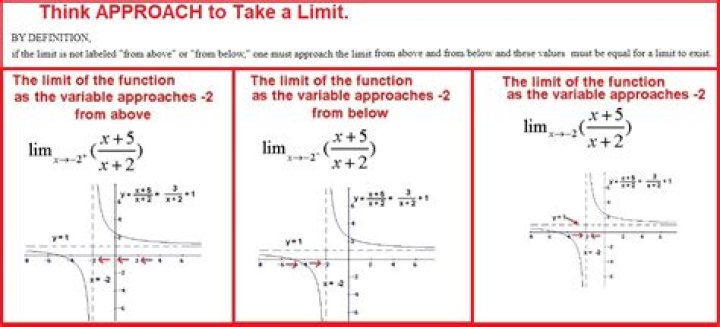
So i have done a proof on that and i want to know if it has correct reasoning and if it is rigorous enough. (First time posting here and i am self-studying)
Suppose that $\lim_{x\to0} \frac{1}{x}$ exists and $\lim_{x\to0} \frac{1}{x}$ = L
By the definition of limits, for all $\epsilon$ > $0$ exists some $\delta$ > $0$ such that, for all x, if $0 < |x-a| < \delta \rightarrow |\frac{1}{x} - L| < \epsilon$.
Then, we have that $|\frac{1}{x} - L| < \epsilon$ when $0 < |x| < \delta$.
Let $x = k$, if $x > 0$
$|\frac{1}{k} - L| < \epsilon$
$L - \epsilon < \frac{1}{k} < L + \epsilon \rightarrow Lk - \epsilon k < 1 < Lk + \epsilon k$
Let $x = -k$, if $x < 0$
$|\frac{1}{-k} - L| = |-(\frac{1}{k} + L)| = |\frac{1}{k} + L| < \epsilon$
$-L - \epsilon < \frac{1}{k} < -L + \epsilon \rightarrow -Lk - \epsilon k <1<-Lk + \epsilon k$
Then, adding $ 1 < Lk + \epsilon k$ and $1<-Lk + \epsilon k$ we have that $2 < 2 \epsilon k$
Thus, $1 < \epsilon k$ $\quad(I)$
If we take $\epsilon \le \frac{1}{|k|}$, $(I)$ becomes false which lead us to a contradiction.
Therefore, $\exists \epsilon >0, \forall \delta>0, \forall x$ such that if $0 < |x| < \delta \rightarrow |\frac{1}{x} - L| \ge\epsilon$.
$\endgroup$ 32 Answers
$\begingroup$We have that
$$\lim_{x\to0} \frac{1}{x}=L \implies \lim_{x\to0^+} \frac{1}{x}=L\ge 0$$
and for any $\varepsilon>0$ we have
$$ \left|\frac{1}{x} - L\right| < \varepsilon \iff L-\varepsilon<\frac1x<L+\varepsilon$$
but the inequality fails for
$$\frac{1}{x}>L+\varepsilon \iff x<\frac1{L+\varepsilon} $$
$\endgroup$ $\begingroup$You have some good ideas, but express them poorly.
A good idea is to divide between $x>0$ and $x<0$, but it's better first to exclude the case that $L\ne0$.
Let's suppose $L>0$, first. Then we can take $\varepsilon=L/2$ and, by definition of limit, there exists $\delta>0$ such that, for $0<|x|<\delta$, we have $|1/x-L|<L/2$. This becomes$$ -\frac{L}{2}<\frac{1}{x}-L<\frac{L}{2} $$which becomes$$ \frac{L}{2}<\frac{1}{x}<\frac{3L}{2} $$but then the inequality cannot hold for $-\delta<x<0$.
The case $L<0$ can be excluded in a similar way.
It only remains $L=0$, but this easily yields a contradiction: take $\varepsilon=1$; then there exists $\delta>0$ such that, for $0<|x|<\delta$, it holds$$ \Bigl|\frac{1}{x}\Bigr|<1 $$which is the same as $|x|>1$; however, for every $\delta>0$ there exists $x$ such that $0<|x|<\delta$ and $|x|<1$. Contradiction.
You may have noticed that the proof for the case $L>0$ is very similar to other proofs you may have already seen about “permanence of sign”. Indeed, it can be generalized to show that
if a function $f$ is nonnegative in a punctured neighborhood of $c$ and $\lim_{x\to c}f(x)=l$ exists, then $l\ge0$.
Of course it also holds the analogous statement for nonpositive functions.
The statement can be also generalized to one-sided limits. Thus if the limit exists for $f(x)=1/x$, the right-hand side limit must be $\ge0$ and the left-hand side limit must be $\le0$. This only leaves room for $L=0$, which can be easily excluded.
The same considerations about the sign leads to conclude that an infinite limit cannot exist as well; indeed, if the limit is infinite, it should be $\infty$ because at the right of $0$ the function is positive, but also $-\infty$, because the at the left of $0$ the function is negative.
Finally note that in proving that a limit does not exist, we're free to use particular values of $\varepsilon$, so long as they lead to the wanted contradiction.
$\endgroup$