Question about Fourier transforms of gradient, curl and divergence
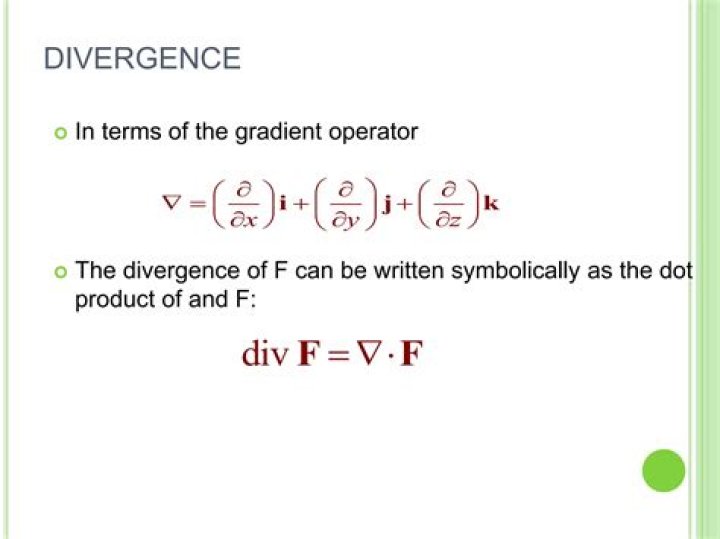
Consider a vector field $v:\mathbb{R}^3\rightarrow\mathbb{R}^3$. Denote by $F_u$ the Fourier transform of a scalar or vector field $u$. Can one finds an equality relation between $F_v,F_{\mathrm{curl}v}$ and $F_{\mathrm{div}v}$? The reason that I asked question is that I need to give an upper bound to $F_v$, say in $L^2$, if it is conditioned that $F_{\mathrm{curl}v}$ and $F_{\mathrm{div}v}$ are bounded in $L^2$, that is \begin{equation} \|F_v\|^2\leq C(\|F_{\mathrm{curl}v}\|^2+\|F_{\mathrm{div}v}\|^2) \end{equation} for some constant $C$, but so far I haven't seen how to express $F_v$ in terms of $F_{\mathrm{curl}v}$ and $F_{\mathrm{div}v}$ to get this estimate. Can someone help me? It is also assumed that every term is well defined in related vector spaces if it is needed.
$\endgroup$1 Answer
$\begingroup$The relations are as follows: $$ F_{\operatorname{div} v}(\vec \xi) = i \vec\xi\cdot F_v,\qquad F_{\operatorname{curl} v}(\vec \xi) = i \vec\xi\times F_v \tag{1} $$ They are easier to remember if one uses the notation $\nabla \cdot v$ and $\nabla \times v$, and notes that on the Fourier side, differentiation (i.e., $\nabla$) corresponds to multiplication by $i\vec \xi$. You can find the calculations here; related posts from the same blog are this and this.
In general, one cannot recover a vector field from curl and divergence, because there exist vector fields with zero curl and zero divergence: e.g., constant fields, and more generally fields of the form $\nabla u$ where $u$ is a harmonic function. The Fourier transform relation $(1)$ expresses this by the fact that multiplication by $\vec\xi$ kills the contribution of the origin (which could be Dirac mass or some of its derivatives).
However, you are probably interested in the case when $v$ vanishes at infinity. Then $v$ can be reconstructed: see Wikipedia article Helmholtz decomposition and the aforementioned blog. For $\vec \xi\ne 0$ the relations $(1)$ imply $$ |F_v (\vec\xi)|^2 = \frac{1}{|\vec\xi |^2}(|F_{\operatorname{div} v}(\vec \xi)|^2 + |F_{\operatorname{curl} v}(\vec \xi)|^2)$$ Note that you still have to worry about small frequencies, i.e., long tail of $v$: they can kill your $L^2$ estimate. For example: the field $\nabla \min(1,|\vec x|^{-1/2})$ decays as $|\vec x|^{-3/2}$, and so is not in $L^2(\mathbb{R}^3)$, while its divergence is in $L^2$ and its curl is zero.
$\endgroup$ 1More in general

"Zoraya ter Beek, age 29, just died by assisted suicide in the Netherlands. She was physically healthy, but psychologically depressed. It's an abomination that an entire society would actively facilitate, even encourage, someone ending their own life because they had no hope. Th…"

