Second order derivative of a chain rule (regarding reduction to canonical form)
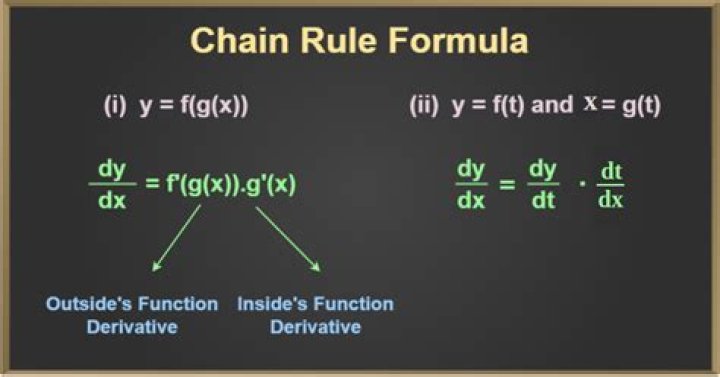
I've been stuck on this for a couple of days. So this is from this book ("Partial Differential Equations in Mechanics 1", page 125).
Section 4.2 Reduction to canonical forms, which leads to the development of the Laplace equation.
In this section, I don't understand how they expand the second-order partial derivative:
Where,
Here is what I got so far. When I do it, I only get to have 4 terms, and not 5 like what's in the book. Here I apply product rule first and then the chain rule (Note, I'm using square brackets to indicate that I am taking the partial derivative of whatever is in them. Just to keep it organized).
$$\begin{align} \frac{\partial}{\partial x}\frac{\partial u}{\partial x} &= \\ &= \frac{\partial}{\partial x} \biggl( \frac{\partial u}{\partial \xi} \frac{\partial \xi}{\partial x} + \frac{\partial u}{\partial \eta} \frac{\partial \eta}{\partial x} \biggr) \\ &=\frac{\partial}{\partial x} \biggl( \frac{\partial u}{\partial \xi} \frac{\partial \xi}{\partial x}\biggr) + \frac{\partial}{\partial x} \biggl(\frac{\partial u}{\partial \eta} \frac{\partial \eta}{\partial x} \biggr) \\ &= \frac{\partial}{\partial x} \biggl[ \frac{\partial u}{\partial \xi} \biggr] \frac{\partial \xi}{\partial x} + \frac{\partial u}{\partial \xi} \frac{\partial}{\partial x} \biggl[ \frac{\partial \xi}{\partial x} \biggr] + \frac{\partial}{\partial x} \biggl[ \frac{\partial u}{\partial \eta} \biggr] \frac{\partial \eta}{\partial x} + \frac{\partial u}{\partial \eta} \frac{\partial}{\partial x} \biggl[ \frac{\partial \eta}{\partial x} \biggr] \\ \text{Now the chain rule:}\\ &= \frac{\partial}{\partial \xi}\biggl[\frac{\partial u}{\partial \xi}\biggr] \frac{\partial \xi}{\partial x} \frac{\partial \xi}{\partial x} + \frac{\partial u}{\partial \xi} \frac{\partial^2 \xi}{\partial x^2} + \frac{\partial}{\partial \eta}\biggl[\frac{\partial u}{\partial \eta}\biggr] \frac{\partial \eta}{\partial x} \frac{\partial \eta}{\partial x} + \frac{\partial u}{\partial \eta} \frac{\partial^2 \eta}{\partial x^2} \\ &=\frac{\partial^2 u}{\partial \xi^2} \biggl(\frac{\partial \xi}{\partial x} \biggr)^2 + \frac{\partial u}{\partial \xi} \frac{\partial^2 \xi}{\partial x^2} + \frac{\partial^2 u}{\partial \eta^2} \biggl(\frac{\partial \eta}{\partial x} \biggr)^2 + \frac{\partial u}{\partial \eta} \frac{\partial^2 \eta}{\partial x^2} \end{align} $$My tree of the chain rule looks like this (is it correct?)
In addition, if someone could explain why this chain rule is valid? Granted, this may be a whole topic on its own, so if you could just point to some resource or what this particular operation is called, that would do.
$$ \frac{\partial}{\partial x}\biggl[ \frac{\partial u}{\partial \xi} \biggr] = \frac{\partial}{\partial \xi} \biggl[\frac{\partial u}{\partial \xi}\biggr]\frac{\partial \xi}{\partial x} $$
Thank you in advance.
UPDATE:
(as per answer by @peek-a-boo)
P.S. Corrections or edits are welcomed.
$\endgroup$1 Answer
$\begingroup$You have a mistake when calculating $\dfrac{\partial}{\partial x}\left[\dfrac{\partial u}{\partial \xi}\right]$ and $\dfrac{\partial}{\partial x}\left[\dfrac{\partial u}{\partial \eta}\right]$ in the middle where you're missing a extra step in the chain rule. For simplicity, just call $v:= \dfrac{\partial u}{\partial \xi}$. Then by equation (4.11), we have\begin{align} \dfrac{\partial v}{\partial x} &= \dfrac{\partial v}{\partial \xi} \dfrac{\partial \xi}{\partial x} + \dfrac{\partial v}{\partial \eta} \dfrac{\partial \eta}{\partial x}. \end{align}So, if we plug in the definition of $v$, we get\begin{align} \dfrac{\partial}{\partial x}\left[\dfrac{\partial u}{\partial \xi}\right] &= \dfrac{\partial^2 u}{\partial \xi^2} \dfrac{\partial \xi}{\partial x} + \dfrac{\partial^2 u}{\partial \eta \partial \xi} \dfrac{\partial \eta}{\partial x}. \end{align}Similarly,\begin{align} \dfrac{\partial}{\partial x}\left[\dfrac{\partial u}{\partial \eta}\right] &= \dfrac{\partial^2 u}{\partial \xi \partial \eta} \dfrac{\partial \xi}{\partial x} + \dfrac{\partial^2 u}{\partial \eta^2} \dfrac{\partial \eta}{\partial x}. \end{align}Finally, when you put all of this together, just remember that mixed partial derivatives are equal: $\dfrac{\partial^2 u}{\partial \xi \partial \eta} = \dfrac{\partial^2 u}{\partial \eta \partial \xi}$ (that's how the factor of $2$ comes up in equation $4.13$)
And yes, your chain rule tree looks right (that's how you can get 4.11 and 4.12). You can also create similar chain-rule trees for $\frac{\partial u}{\partial \xi}$ and $\frac{\partial u}{\partial \eta}$. As for why the chain rule is valid... well that's a completely different issue, which you should probably ask in a separate question if this answer isn't sufficient.
$\endgroup$ 10