Show that the intersection of two measurable sets is measurable
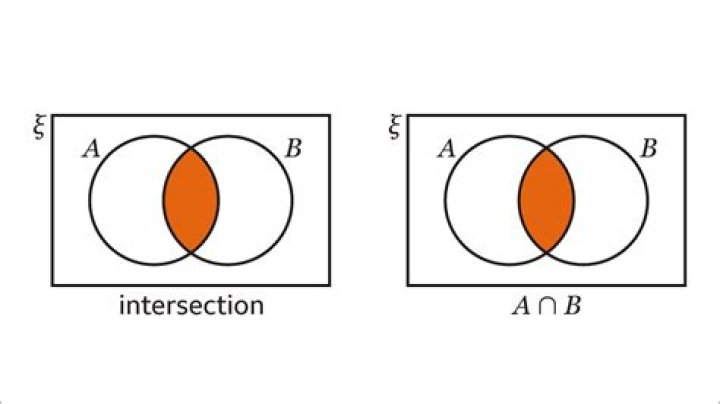
I want to show that the intersection of two measurable sets is measurable using the following theorem:
If $E\in\mathbb{R}$ is a measurable set, then the following assertion is equivalent to the measurability of $E$:
There is a $G_{\delta}$ set $G$ containing $E$ for which $m^*(G\setminus E)=0$.
And I am not sure where to start. Any hints are appreciated!
$\endgroup$1 Answer
$\begingroup$Let $E,E'$ be measurable sets. Let $E\subset G$ and $E'\subset G'$ where $G,G'$ are $G_{\delta}$ sets with $m(^*G \setminus E)=0=m^*(G' \setminus E').$ Then $$G\cap G'= D\cup (E\cap E')$$ $$\text { where }\quad D=A\cup B \cup C$$ $$\text { where }\quad A=G\cap (G' \setminus E'),\;\; B=G'\cap (G \setminus E),\;\; C=(G \setminus E)\cap (G' \setminus E').$$ Each of $A,B, C$ is a subset of a set of outer measure $0$ so each of $A,B,C$ has outer measure $0.$ So $$m^*(D)=m^*(A\cup B\cup C)\leq m^*(A)+m^*(B)+m^*(C)=0.$$ And the intersection of two $G_{\delta}$ sets is a $G_{\delta}$ set so $G\cap G'$ is a $G_{\delta}$ set. And $D=(G\cap G') \setminus (E\cap E').$
$\endgroup$ 3