Taylor series for $\sqrt{1+x^2}$
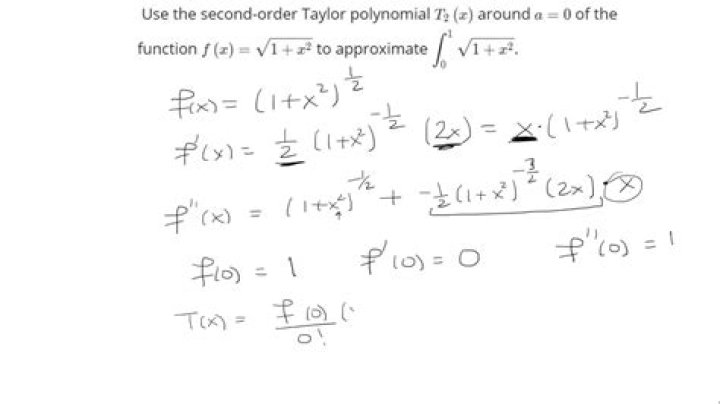
I want to expand $$f(x)=\sqrt{1+x^2}$$ in powers of $x-2$
I started by getting the maclaurin series $$\sqrt{1+x}=1+\frac{1}{2}x+\frac{1}{2} \left( \frac{-1}{2} \right) \frac{x^2}{2!} + \frac{1}{2} \left( \frac{-1}{2}\right) \left(\frac{-3}{2}\right)\frac{x^3}{3!}$$ $$\sqrt{1+x^2}=1+\frac{1}{2}x^2+\frac{1}{2}\left(\frac{-1}{2}\right)\frac{x^4}{2!}+\frac{1}{2} \left(\frac{-1}{2}\right)\left(\frac{-3}{2}\right)\frac{x^6}{3!}$$
Then $$\sqrt{1+x^2}=\sqrt{1+(x-2)^2-4+4x}=\sqrt{(x-2)^2-3+4x}=\sqrt{(x-2)^2-3+4(x-2)+8}$$ I could not complete , what can we do then ?
(I know that we can differentiate the function and substitute in the Taylor formula , but I want a shorter way)
for example :
if we want to expand $$g(x)=\frac{1}{1-x}$$ around $x=2$ we can start by
\begin{align}
g(x) & =\frac{1}{1-x}=\frac{1}{1-(x-2)-2}=\frac{-1}{1+(x+2)} \\[10pt]
& =-[1-(x-2)+(x-2)^2-(x-2)^3+\cdots]
\end{align}
So I want to get convert $f(x)$ to a form that we can write its expansion without getting derivatives, like I did with $g(x)$ above
$\endgroup$ 24 Answers
$\begingroup$If you want to take the limit when $x\to 2$ it is easier to set $x=2+u$ with $u\to 0$ because you will get it easier to make the expansions in variable $u$.
Thus $f(x)=\sqrt{1+x^2}=\sqrt{1+(2+u)^2}=\sqrt{5+4u+u^2}$
The proper expansion in zero is $\displaystyle \sqrt{1+v}=1+\frac v2-\frac{v^2}8+\frac{v^3}{16}-\frac {5v^4}{128}+\cdots$
We need first to factorize $5$ out of the square root.
$f(x)=\sqrt{5}\sqrt{1+\frac 45u+\frac 15u^2}\quad$ and then substitute $v=(\frac 45u+\frac 15u^2)$ in the expansion.
For instance let's limit ourselves to $o(u^3)$
$$f(x)=\sqrt{5}\left(1+\frac 12\left(\frac 45u+\frac 15u^2\right)-\frac 18 \left(\frac 45u+\frac 15u^2\right)^2 + \frac 1{16} \left(\frac 45u+\frac 15u^2 \right)^3 + o(u^3)\right)$$
We will do the calculation while ignoring all terms smaller than $o(u^3)$ (i.e terms in $u^4, u^5, \ldots$).
\begin{align} f(x) & =\sqrt{5}\left(1+\frac 12\left(\frac 45u+\frac 15u^2\right)-\frac 18 \left(\frac {16}{25}u^2+2\frac 45\frac 15u^3\right)+\frac 1{16} \left(\frac 45u\right)^3 + o(u^3)\right) \\[8pt] &=\sqrt{5}\left(1+\frac 25 u+\frac 1{50}u^2-\frac 1{125}u^3+o(u^3)\right) \end{align}
In the end replace $u$ by $(x-2)$ to have the desired expansion:
$$f(x)=\sqrt{5}\left(1+\frac 25 (x-2)+\frac 1{50}(x-2)^2-\frac 1{125}(x-2)^3+o((x-2)^3)\right)$$
$\endgroup$ 9 $\begingroup$The Generalized binomial formula for $a\in \Bbb R\setminus \{\Bbb N\}$ says
$$(1+x)^a= \sum_{k=1}^{\infty}{a\choose k} x^k$$ where: $$ \color{blue}{{a\choose k} =\frac{a(a-1)\cdots(a-k+1)}{k!}}$$ see here
just take $a=1/2$ and replace $x$ by $x^2$.
$\endgroup$ 2 $\begingroup$To give the general term expansion let $y=x-2$, then \begin{align} \sqrt{1+x^2} &= \sqrt{1+ (y+2)^2} = \sqrt{5 + 4y + y^2} = \sqrt{5} \sqrt{1 + \frac{y}{5}(4+y)}\\ &= \sqrt{5}\sum_{n=0}^{\infty} \binom{1/2}{n} \left[\frac{y}{5}(4+y)\right]^n = \sqrt{5}\sum_{n=0}^{\infty} \binom{1/2}{n} \frac{y^n}{5^n}\sum_{k=0}^n\binom{n}{k}4^k y^{n-k} \end{align} Extracting the $m$th coefficient, $[y^m]\sqrt{1+(y+2)^2}$, which may be found by considering which multiples of $y^n$ and $y^{n-k}$ equal $y^m$, i.e., when $n+(n-k) = 2n-k = m$, so we only take the $k=2n-m$ term from the inner summation above. Hence the $m$th coefficient is \begin{align} [y^m] \sqrt{5}\sum_{n=0}^{\infty} \binom{1/2}{n} \frac{y^n}{5^n}\sum_{k=0}^n\binom{n}{k}4^k y^{n-k} &= \sqrt{5} \sum_{n=0}^{\infty} \binom{1/2}{n} \frac{1}{5^n} \binom{n}{2n-m}4^{2n-m}\\ &= \frac{\sqrt{5}}{4^m} \sum_{n=0}^{\infty} \binom{1/2}{n} \binom{n}{2n-m} \left(\frac{16}{5}\right)^n \end{align} Moreover, the binomial coefficient $\binom{n}{2n-m}$ is $0$ for $2n-m<0$ and for $n < 2n-m$, so we need only consider $n \geq m/2$ and $n\leq m$. Removing zero terms and a bit of algebra gives the Taylor series $$\sqrt{1+x^2} = \sum_{m=0}^{\infty} c_m y^m = \sum_{m=0}^{\infty}c_m (x-2)^m,\quad\text{where}\; c_m \equiv\frac{\sqrt{5}}{4^m}\sum_{n=\lceil m/2\rceil }^m\binom{1/2}{n} \binom{n}{2n-m} \left(\frac{16}{5}\right)^n$$
$\endgroup$ 0 $\begingroup$You have already done what you want, I guess. Your question was kind of unclear to me at first because you said you didn't want to do any substitutions at all, so let me see if I can make my point understood by expressing it in detail.
Suppose that you have already expressed $f(x)$ as a power series at $x=0$. $$f(x)=a_0+a_1x+a_2x^2+\cdots$$ You want to obtain the power series at $x=a$. Suppose that we're dealing with formal powers series and ignore analytic and convergence issues for now. Substitute $x=u+a$ to obtain: $$f(u+a)=a_0+a_1(u+a)+a_2(u+a)^2+\cdots$$ Do some boring calculations, clear out things and express it as a power series in powers of $u$:
$$f(u+a)=b_0+b_1u+b_2u^2+\cdots$$
And now substitute back to $x$ again:
$$f(x)=b_0+b_1(x-a)+b_2(x-a)^2+\cdots$$
The only messy part is that you should use binomial expansion several times to calculate $b_i$'s.
One might think that the constant coefficient $b_0$ cannot be calculated because $b_0=a_0+\sum_{i=1}^{\infty}a_ia^i$, but in fact $b_0$ is pretty easy to calculate because $b_0 = f(a)$ by plugging $u=0$. Therefore, as a bonus, you get:
$$f(a)=a_0+\sum_{i=1}^{\infty}a_ia^i$$
This is precisely what you need to do to your series and any method of calculating what you want is something like this in diguise.
Now if your function happens to be analytic in a domain and you stay at a point in that domain, you're fine but your radius of convergence is certainly changed. In your particular case, $$\sqrt{1+x^2}$$ is analytic everywhere in real numbers and therefore, you have no problems at all because the radius of convergence is infinity.
$\endgroup$More in general

What are the ramifications of clearing Fort Independence?

