What does $f(x,y)$ mean?
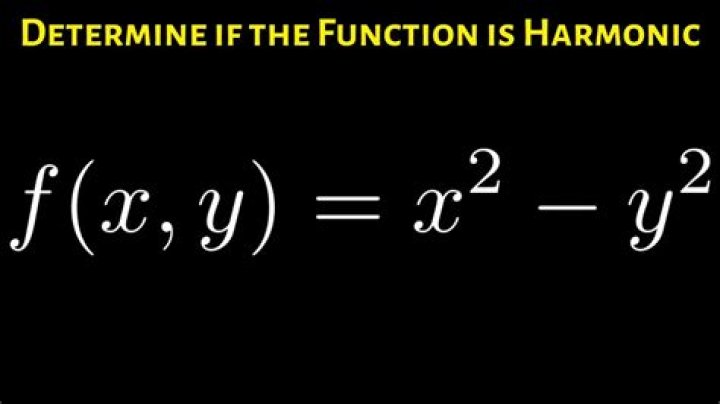
I know from the chapter "functions" that $f(x)$ is a function of $x$ and to roughly put it, it maps $x$ values to another set called co-domain where all the $y$ values are.
But I also sometimes see $f(x,y)$ on internet. I can guess that it means some expression in $x$ and $y$.
I'm not familiar with them yet and they aren't in my high school syllabus but I'd love to know more about and I have a few questions,
$\endgroup$ 0
What type of function is this? What's it called?
What does is represent? Can you also represent $f(x,y)$ using arrow diagram between $2$ sets?
Is $(x,y)$ in $f(x,y)$ an ordered pair? Or $f(x,y)$ is same as writing $f(y,x)$
5 Answers
$\begingroup$You can call $f(x,y)$ might be called a function of two variables. An example that might be helpful would be something like $f(x,y)=x^2+y^2$. This function takes in two numbers, takes their squares and adds them. Note that a function of two variables doesn't need to do the same thing to both variables. We could also make a function $g(x,y) = x^3 + xy+1$ for example. You can represent them using an arrow diagram. Your set to the left of your arrow will be the set of ordered pairs of $(x,y)$. And yes, the you do need to think of $(x,y)$ as an ordered pair. It is not necessarily the case that $f(x,y)=f(y,x)$. See the $g(x,y)$ example above and note that $g(0,1)=1$ but $g(1,0)=2$.
Many functions in real life are functions of more than one variable. An example from physics: the gravitational pull an object experiences from a planet is a function of both the planet's mass and the distance to the planet.
$\endgroup$ 2 $\begingroup$$f(x,y)$ is a function which takes in an ordered pair $(x,y)$ and gives some output. It's still called a function, but if you want to be specific, you can call it a function of two variables.
You can still represent it using an arrow diagram (depending on your drawing skills, of course). For instance, if $x$ and $y$ are both real numbers, then the set of all possible ordered $(x,y)$ pairs is the plane, so that would be the natural domain to let the arrow point away from.
If the order of $x$ and $y$ happens to not matter for your function, then it is called symmetric.
$\endgroup$ $\begingroup$Here is a short answer to your questions:
1) The function can be called a bivariate function; it is a function that depends on two variables $x$ and $y$ that may assume different domains. The function is defined on the union of those domains. An example is $$ f(x,y) : = x^2 + y^2$$
If you fix $x$ to any value say $\bar{x}$, then $f(\bar{x}, y)$ is a function in $y$. The same holds if you fix $y$ instead, then the function becomes a function in $x$.
2) it represents a rule of mapping values of $x$ and $y$; you can still use arrow diagrams yes.
3) When you define the function, the pair $(x,y)$ should be ordered. But it is a matter if notation which argument u want to appear first.
$\endgroup$ $\begingroup$That's called a function of two variables. A function $f:\mathbb{R^2} \to \mathbb{R}$ is a function that maps a pair of real numbers $(x,y)$ to another real number $z$. Of course we don't limit ourselves only to two variables, the general case are functions from $\mathbb{R^n}$ to $\mathbb{R^m}$, they map $n$-tuples $(x_1,...,x_n)$ to $m$-tuples $(y_1,...,y_m)$. It's above high school level though.
$\endgroup$ $\begingroup$1) It is a function of two variables.
2) It represents a function from points in a plane to points on a line.
3) (x,y) is an ordered pair. In general f(x,y) is not the same as f(y,x).
$\endgroup$More in general

"Zoraya ter Beek, age 29, just died by assisted suicide in the Netherlands. She was physically healthy, but psychologically depressed. It's an abomination that an entire society would actively facilitate, even encourage, someone ending their own life because they had no hope. Th…"

