Why do we use the the Chain Rule for the Fundamental Theorem of Calculus Part 1?
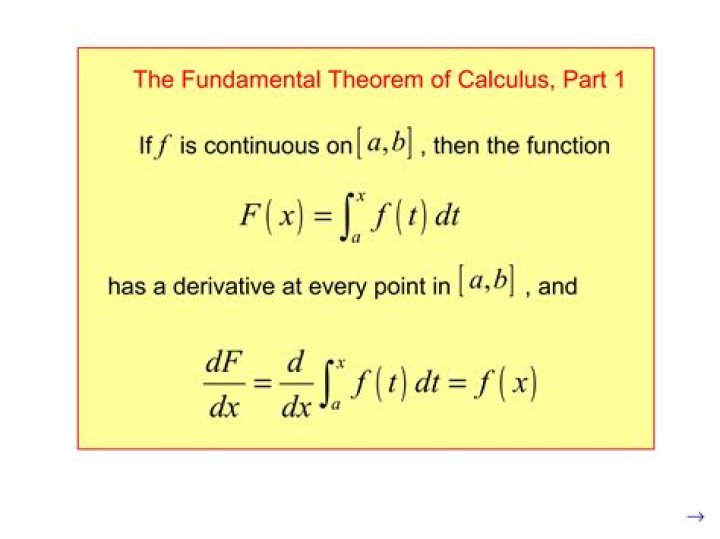
So part 1 of the Fundamental Theorem of Calculus states: If $f$ is continuous on $[a,b]$, then the function $g$ defined by\begin{equation} g(x) = \int_{a}^{x} f(t) \;\mathrm{d}x \qquad a \leq x \leq b \end{equation}is continuous on $[a,b]$ and differentiable on $(a,b)$, and $g'(x) = f(x)$.
In my opinion the derivative should be more general as:\begin{equation} g'(x) = \frac{\mathrm{d}}{\mathrm{d}x}\left[\int_{a}^{u} f(t) \;\mathrm{d}x\right]\frac{\mathrm{d}u}{\mathrm{d}x} \qquad a \leq x \leq b \end{equation}Where $u$ is some function of $x$.
The reason I write the above use of the chain rule is because one can encounter such a scenario often, for example:
Find $h'(x)$ where\begin{equation} h(x) = \int_{1}^{e^{x}} \mathrm{ln}(t) \;\mathrm{d}t \end{equation}\begin{align} h'(x) = \frac{\mathrm{d}}{\mathrm{d}x} \left[ \int_{1}^{e^x} \mathrm{ln}t \;\mathrm{d}t \right] \end{align}By the chain rule $\textit{Let}$ $e^x = u$\begin{align} h'(x) = \frac{\mathrm{d}}{\mathrm{d}x} \left[ \int_{1}^{u} \mathrm{ln}t \;\mathrm{d}t \right]\frac{\mathrm{d}u}{\mathrm{d}x} \end{align}Where\begin{align} \frac{\mathrm{d}u}{\mathrm{d}x} &= \frac{\mathrm{d}}{\mathrm{d}x} \left[e^{x}\right]\\ &= e^{x} \end{align}$h'(x)$ becomes\begin{align} h'(x) &= \frac{\mathrm{d}}{\mathrm{d}x} \left[ \int_{1}^{u} \mathrm{ln}t \;\mathrm{d}t \right]\left(e^{x}\right)\\ &= \mathrm{ln}(u)e^{x} \end{align}Substituting $e^{x}$ for $u$\begin{align} h'(x) &= \mathrm{ln}(u)e^{x}\\ &= \mathrm{ln}\left(e^{x}\right)e^{x}\\ &= xe^{x} \end{align}
What confuses me is the reason that we are able to apply the chain rule in this way. My understanding was that the chain rule is applied to take the derivative of a composite function e.g. $\frac{\mathrm{d}}{\mathrm{d}x}f(g(x))$. So since we are using the chain rule in this way, does that mean that the integral is a function...? My understanding was that the integral was just an operator. Even still this appears to raise more questions for me, like why is the $u$-substitution being appied to the interval of the integral? What does the interval have to do with the chain rule...? I suspect that I perhaps simply don't have a solid enough understanding of the chain rule.
$\endgroup$ 21 Answer
$\begingroup$The integral itself is not a function, but it does define a function. When I first started learning calculus, I made this concrete in my head by writing
$$h(x)=F(e^x)$$
instead of
$$h(x)=\int_{1}^{e^x}\ln(t)\text{ }dt$$
where
$$F(x)=\int_{1}^{x}\ln(t)\text{ }dt$$
It then follows from the chain rule that
$$h'(x)=F'(e^x)\cdot\frac{d}{dx}e^x=F'(e^x)e^x$$
But $\text{FTC}1$ implies that $F'(x)=\ln(x)$, so we can write
$$h'(x)=\ln(e^x)e^x=xe^x$$
I hope this makes applying $\text{FTC}1$ with the chain rule more intuitive!
$\endgroup$